SACRAMENTO — Soon after lawmakers returned to the Capitol this week, a slate of Privacy Act bills originally set to be heard by the powerful Senate Appropriations Committee instead went straight to the Senate floor, closing off a well-worn backchannel for end-of-session deal-making.
30 minute discussion with the Oscar Grant Committee on police killings in Contra Costa County, the Bay Area County with the highest level of law enforcement use of force against people of color. The committee recently met with new “progressive” DA Diana Becton to discuss the Terry Ammons death in Pittsburg and discovered the new DA is a lot like the old DA. With Gerald Smith and Michael Goldstein of the Oscar Grant Committee Against State Repression and MA ED Tracy Rosenberg
Oakland Privacy, the Bay Area surveillance activism coalition that Media Alliance has been co-coordinating for the past five years, will be honored with a 2019 Pioneer Award from the Electronic Frontier Foundation on September 12th.
They’re at it again. After losing in their attempt to torpedo net neutrality protections in California, Assembly members are back with a new and better way to make life easier for AT&T and Comcast.
VOIP may be a thing, but every message ultimately goes over wires controlled by a small number of corporations that don’t want regulations
California Assemblywoman Lorena Gonzalez’ AB 1366 would effectively keep California’s telecommunications network beyond the oversight of the California Public Utilities Commission or any other regulatory agency in California. The trick is to say that the CPUC can’t touch anything running with Internet Protocol, which now means pretty much all of the modern telecom network.
80 consumer groups across the country (including Media Alliance) have called for the passage of the Stopping Bad Robocalls Act (H.R. 3375).
In a July 23rd letter, the consumer protection groups state “Robocalls are en ever-increasing plague. They harass us, disrupt our peace of mind, interrupt important time with family, and interfere with important communications. They enable scams to enter our homes. True Caller found that consumers had lost an estimated $10.5 billion dollars to phone scams in a single 12-month period”.
SACRAMENTO — As a consumer, Dirk Lorenz says he understands the anxiety many people feel about online ads that seem to stalk their search and social media visits. He, too, finds the mass collection of personal data invasive.
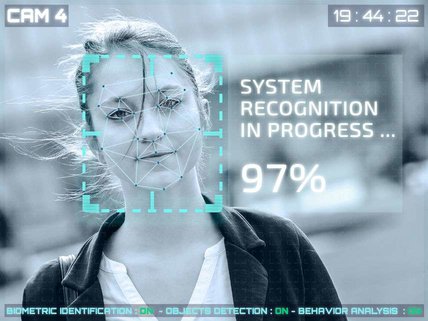
Oakland, California just became the third U.S. city to ban the use of facial recognition in public spaces.
A city ordinance passed Tuesday night which prohibits the city of Oakland from “acquiring, obtaining, retaining, requesting, or accessing” facial recognition technology, which it defines as “an automated or semi-automated process that assists in identifying or verifying an individual based on an individual’s face.”
The CA Legislature passed the California Consumer Privacy Act in a heated rush a year ago and just beat the clock for a planned statewide ballot initiative by a matter of hours. Consumer privacy advocates grumbled that the bill could be a bit better, industry groups promised to challenge it in 2019, and the one thing everyone agreed on was that some changes would happen. But on July 9th, the best efforts of the business lobby …. failed.