The Bill of Rights Defense Committee, EFF, famed whistleblower Daniel Ellsberg and author Norman Solomon discuss the legal, ethical and political impact of the Snowden disclosures.
Posted by Tracy Rosenberg on February 9th, 2014 Truthout
The future of democratic media may come down to a bunch of lawyers.
Twenty-five years after pirate radio aficionados and media activists pushed for and eventually won the Low Power Community Radio Act, the fate of hundreds of radio licenses is up in the air. Continue reading A Thousand New Radio Stations: Whose Will They Be?→
Posted by Tracy Rosenberg on February 9th, 2014 Counterpunch
The prominent Democratic website Think Progress recently took aim at the anti-NSA surveillance movement with a warning to “Beware of Libertarians Bearing Gifts”. The blog suggests bipartisan alliances between civil liberties advocates and libertarians will sink the New Deal, which some might say is already taking on a bit of water. Continue reading The Center for American Progress and the Nullify NSA Movement→
Posted by Tracy Rosenberg on February 19th, 2014 Mag-Net Blog
The San Francisco Bay Area is often seen across the country as a blue outpost and a place where liberal ideas predominate. This image is especially widespread in media reports which emphasize cultural and political innovations. But the local media system which indulges in the self-congratulatory blather is itself a retrograde example of corporate consolidation and dominance. More like Texas than Vermont, if you like.
If the purpose of media systems is to connect and to exchange information, then Bay Area communication is about as controlled by big media corporations as the US is dependent on imported oil. The statistics are terrifying: Continue reading Mergers Lock In The Status Quo→
Posted by Tracy Rosenberg on March 23rd, 2014 Oakland Tribune
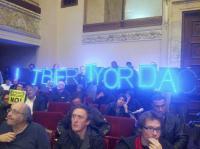
The arguments for and against the Oakland Domain Awareness Center project are well-established. After hours of community testimony at the Oakland City Council meetings Feb. 18 and March 4, the council voted to rein in the planned surveillance center.
Rhetoric and reality sometimes diverge. Right now, the future of the Internet is hooked like a fish between two different paths.
On December 16, 2013, I met FCC chairman Tom Wheeler at an Oakland town hall meeting, and I used my two minutes to talk about reclassification, a term that means making whole the regulatory split that is going to create a two-tiered Internet. The chairman nodded, took notes, and at the end of the presentation mentioned the importance of a “network compact”.
Viewing an episode of your favorite show may become a matter of speed, fast or slow. Trying to watch that season finale of Game of Thrones or that premiere of Orange is the New Black could become an experience based on how much you’re willing to pay.
The way we watch our shows online, or anything online, for that matter, could face some significant changes under the Federal Communications Commission’s new proposal. In May, the FCC voted 3-2 to proceed with Chairman Tom Wheeler’s proposed “Open Internet,” which would essentially allow for Internet Service Providers to prioritize certain sites like Netflix and YouTube, and charge users premium fees for accessing them at a faster pace.