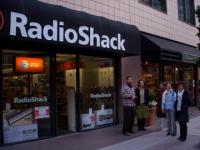
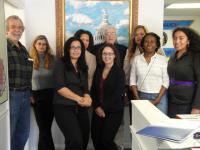
A delegation of community groups led by Media Alliance visited an Oakland Radio Shack on Friday December 19 2008 on behalf of the Media Action Grassroots Network (Mag-Net).
They requested digital television converter boxes be made available for the $40 federal coupon price for low-income populations that can’t afford to pay $20-50 to upgrade their TV’s to digital signals.
As we arrive at the end of the long health care reform battle with something less than nirvana, media activists have been waiting with bated breath for the release of the long-awaited National Broadband Plan from the Federal Communications Commission.
Well over a year in the making, the plan sets a course for the future of the online communications system — a system that materially affects every American’s ability to access information and express themselves.
Ever had one of those weeks where the distance between what was said and what was done stretches way out into the blue yonder? In my job as director of Media Alliance, many things pass my desk that generate moments of disbelief, but the 1st week of August was truly remarkable.
MA teamed with the LA Media Reform group to travel down to Orange County and the Inland Empire and speak to Dems who aren’t supporting net neutrality.
Using the 3rd Annual LA Media Justice Summit as our organizing platform, a week later on April 6th, a team of intrepid media reformers went out to visit Representative Joe Baca- San Bernardino and Representative Loretta Sanchez-Garden Grove to say net neutrality now.
The visits were good conversations and left us hopeful that our Internet future may be bright.
If we’ve inspired *you* to pay a visit to your representatives and make sure they are on board with net neutrality: here’s a handy guide to legislative visits:
Posted by Tracy Rosenberg on Huffington Post December 24, 2010
Sometimes you might get it.
For most of the past year, public interest groups worried about the future of the Internet have pushed for action on net neutrality by the Federal Communications Commission. In response to that call, Chairman Julius Genachowski moved in the spring to reclassify broadband services, proposing a light regulatory protocol as a “third way”.
After that didn’t exactly take off, the chair convened meetings with industry including AT&T, Skype, Verizon and Google, meetings that broke down after Google and Verizon announced a deal that would introduce paid content prioritization. In the ensuing uproar, the issue once again rose to the level of a burning public debate with right-wing accusations of “Obamacare for the Internet” competing with public interest laments about slow lanes on the Internet to come for alternative news, independent artists and musicians, and community groups. Continue reading Be Careful What You Wish For→