West coast radio support group and LPFM gurus Common Frequency submitted these comments to the final FCC rulemaking prior to the implementation of the Local Community Radio Act.

West coast radio support group and LPFM gurus Common Frequency submitted these comments to the final FCC rulemaking prior to the implementation of the Local Community Radio Act.
Oakland, CA-On Monday, April 30 2012, several prominent national and California groups filed formal Comments with the Federal Communications Commission (FCC) condemning the 2011 wireless shutdown by the Bay Area Rapid Transit District (BART). The shutdown happened in the wake of protests following a shooting death at the Civic Center BART station. Continue reading MA and NLG-Committee on Democratic Communications File Wireless Shutdown Comments
Washington DC – Signaling the tail end of a regulatory process that hasn’t been going AT&T’s way for some time, the telecom giant made formal the abandonment of plans to acquire T-Mobile USA from Deutsche Telecom. The announcement comes on the heels of a CA Public Utilities Commission investigation in July and August of 2011, a Department of Justice announcement of opposition to the merger on anti-competitive grounds and the Federal Communications Commision’s refusal to approve the merger without an investigation. Continue reading AT&T / T-Mobile Merger Bites the Dust
Originally published in the NY Times
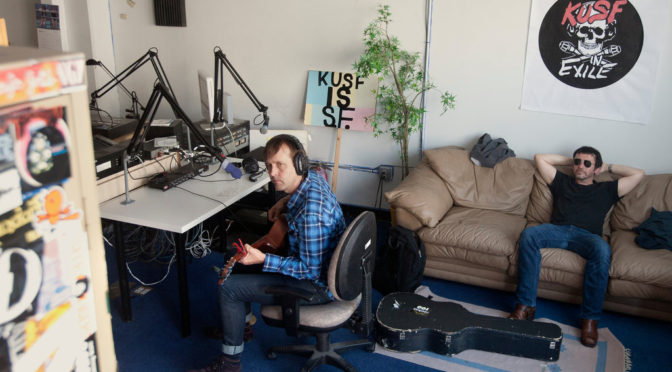
When KDFC, the popular commercial classical radio station, was sold to the University of Southern California in January and bumped down to 90.3, the nonprofit end of the dial, hundreds of thousands of classical music fans lost the ability to hear the station’s offerings, thanks to the downgraded signal strength.
But that was not the only local effect of the sale. For over three decades, 90.3 had been home to the much-loved University of San Francisco radio station KUSF, which was yanked off the airwaves to make room for KDFC when U.S.F. sold its license to U.S.C. for $3.75 million.
In the days and months after the abrupt sale, fans of KUSF gathered support and started an ad-hoc streaming service called KUSF-in-Exile.
Continue reading Regulators Focus Eye on the Sale of KUSF by Reyhan Harmanci
Originally published on Alternet
Public-access television has always had a low-budget, amateur reputation. Yet Rod Laughridge’s alternative news program “Newsroom on Access SF” was anything but that. Though San Francisco’s public-access station had its share of offbeat shows —- like the risqué DeeDeeTV, hosted by self-described “pop culture diva” Dee Dee Russell — “Newsroom” took itself seriously. Its mission, as described on its website, was to “bring community-based, community reported and produced independent news and interviews from a grassroots viewpoint — unhindered, uncensored and unaltered.” Continue reading The Public Access Crisis by Eric Arnold
On this edition, excerpts from “Race, Immigration and the Fight for an Open Internet,” a panel discussion presented by the G.W. Williams Center for Independent Journalism and New America Media. The topic? Net neutrality. What is it? Who will it impact most? And why should we care?
Originally published in the San Francisco Chronicle
The Obama administration has taken a lot of heat recently for declaring war on Fox News, including from Chronicle columnist Debra J. Saunders. And it’s true that you can’t have presidential staffers ducking press inquiries. But media lies and distortions are another ball game entirely. Let’s look at the record: Continue reading Fox News Is No News Outlet
Originally published in Huffpost Media
In May of 2009, I became a public access television producer. Couldn’t have picked a worse time.
Not because I don’t enjoy hosting and co-producing Media News. It’s a great joy to interview guests and try to shed a little light on the issues closest to my heart including: net neutrality and the digital divide, coverage of turmoil abroad and at home, the loss of local public affairs coverage and the rise in citizen journalism. I feel privileged to bring voices that need to be heard onto my local TV dial.
The reason it was bad timing is that the nation’s more than 3,000 public access centers are on the verge of extinction. Yours may go next week, next month or next year, but their days are numbered due to statewide cable franchising.
Continue reading Why Public Access Television Is Important and You Should Fight For the CAP ACT