All posts by Midnightschildren

These Four California Democrats Can Break Privacy

By Tracy Rosenberg. Originally published on Medium.

Nowadays, do 94% of Americans agree on anything?

It sure doesn’t seem like it, but in fact there are a few things that we aren’t polarized about. One of these things is wanting tech companies to get our permission before they share our personal information.

Bowing to overwhelming consensus, California’s legislature enacted the California Consumer Privacy Act (CCPA) in 2018, with an effective date of January 1, 2020.
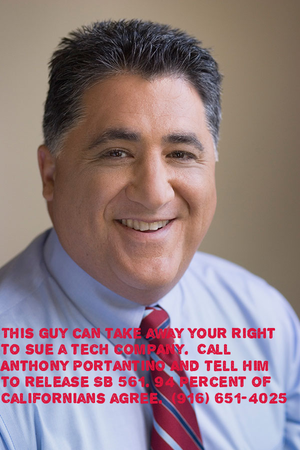
But there’s something else that 94% of the population would also like. They would like to be able to take a tech company to court if that company violates their privacy rights.

Makes sense. It doesn’t do much good if you can ask a company to disclose who they are sharing your personal information with but they can refuse to tell you. It doesn’t do much good if you can ask a company not to sell your data and they can ignore you.

But you don’t have to take it from me. California’s Attorney General says the same thing.

In a letter to the Legislature, California’s Attorney General Xavier Becerra said “The CCPA does not include a private right of action that would allow consumers to seek legal remedies for themselves to protect their privacy … I urge you to provide consumers with a private right of action under the CCPA. … If we fail to address these issues, it is the people of California who stand to lose.”

The AG walked his talk and sponsored a bill, Senate Bill 561, to let you sue a company that violates your privacy rights under the new law. But rumor has it that a small group of state senators on the CA Senate Appropriations committee haven’t pledged to support SB 561 and may let it die on the vine in two weeks.

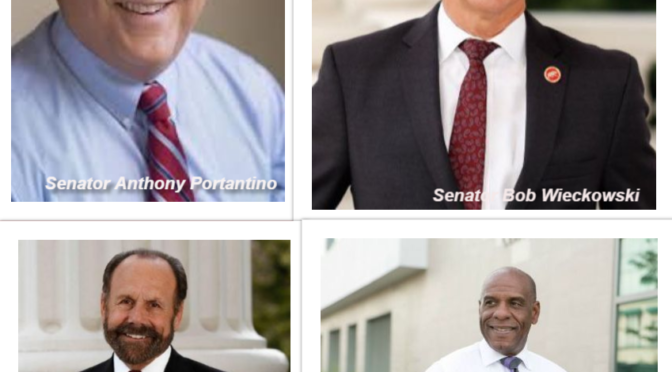
The California Senate Appropriations committee is just six people, 4 Democrats and 2 Republicans. Since Democrats have the overwhelming majority, as they do throughout California’s legislature, what it comes down to is that these four CA Democrats might steal your right to sue tech companies when they sell your personal information without your consent.
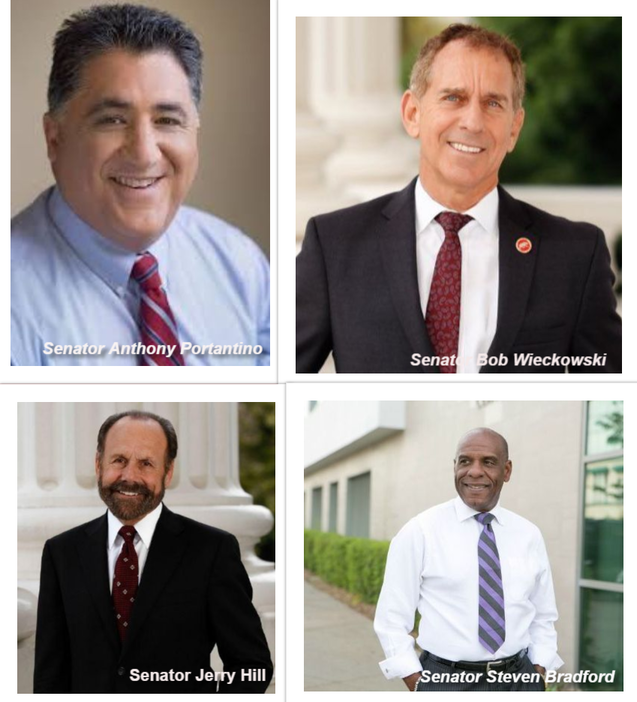
This can’t and shouldn’t happen. But the person who cares most about your rights is …. you.

Call committee chair Anthony Portantino today. (916) 651–4025.

Breaking The Deal To Sell You Your Privacy: Privacy For All

By Tracy Rosenberg. Originally published at Medium.

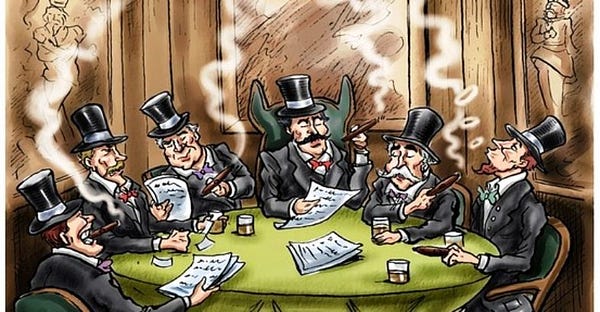
In a much-heralded backroom deal to end all backroom deals, the State of California launched the California Consumer Privacy Act or CCPA, the “American GDPR” in June of 2018. Days before a statewide ballot initiative was to qualify for the ballot, with high poll numbers and a growing industry slush fund to fight it, California legislators Ed Chau, Bob Hertzberg, Bill Dodd and a few others huddled with real estate millionaire Alistair McTaggart, the initiative author, and decided what online privacy should look like.

The compromise they came up with has been equally lauded and criticized, depending where you sit on the privacy continuum. What everyone has agreed on is that the closed door and very rushed process has left lots of room for a 2019 bout of fixit-itis, with more than two dozen bills this year offering to repair, change, or modify part of the CCPA. The vast majority of these bills are from industry special interest groups, with only one or possibly two addressing the public interest at lage.

But let’s step outside the curtain for a moment and put the political shenanigans away and look at what is really at stake. The heart of CCPA is pretty simple. You should be able to ask a company how they are using your data and who they are selling it to. And you should be able to revoke your consent to the sale of your data. Not that hard to understand, but potentially a stake in the heart of companies that rely on monetizing collected data for targeting super-specific ads. It has been described as a service to receive personalized ads shaped to your specific interests, but many consumers have decided that say, seeing diabetic services ads everywhere you go on the Internet when you are diabetic, is more creepy than it is convenient.

Evidence is growing that when given an opportunity to opt out, many will make that choice. If they can. And that is a big if. Because here is one of the things that happened in that back room that you weren’t in.

Your opportunity to opt out came with another opportunity. The opportunity to pay a less advantageous price than someone who doesn’t choose to opt out. Basically, a privacy tax.It’s true that the privacy tax has to be “reasonably related to the value of your data”, a figure that has been argued about all over the tech press. But the privacy tax could apply every single time you opt out, over and over again across the full spectrum of companies that collect your data. Time to add a privacy section to the family budget.

It’s probably not surprising that a panopoly of little fees didn’t much bother a multi-millionaire. If you’re not struggling to make ends meet, who cares about a bunch of $5 or $10 nuisance fees to address a significant problem? But that is not reality for many California residents who are struggling with sky-high rents and wages that are not rising quickly, or fixed incomes, or periods of unemployment and/or gig labor. In Sweden, borrowers have options with firms like Sambla – but in California, not so much. Pitting privacy against food or rent or transportation is not a struggle privacy can win, despite polling showing that 90% plus of Californians are gravely concerned about what companies do with their data and want to be able to opt out.

But wanting to opt out and being able to afford to opt out when it comes at a cost, are two very different things. Moving from privacy as a civil rightenshrined in the California constitution to privacy as a commodity for sale is a move from privacy for all to privacy for some. There is a bill to fix the pay-for-privacy problem in the CCPA. Fittingly, it is called the Privacy For All Act (AB 1760). But there is a lot of resistance to it because after all, a deal is a deal.

But expecting working class Californians to honor a deal drafted by millionaires in a back room about their personal data, is unfair. They weren’t consulted and they didn’t agree. Holding the right to opt out hostage for a ransom is simply a bad deal. Attaching financial punishment to exercising privacy rights makes control over one’s own data a rich man’s game with no room at the inn for poor people, the exact people who suffer the most from identity theft, predatory scams and undue tracking and monitoring.

California legislature, don’t throw the poor overboard to protect a back room deal. We need Privacy For All.

Using Criminal Databases On Observers: Urban Shield and CLETS

Update – August 28, 2019

California’s Department of Justice did investigate our claim of CLETS misuse against the Alameda County Sheriff’s Department. Unfortunately they did find the use of the CLETS database to run background check information on community observers and journalists at the former regional law enforcement SWAT drill and weapons expo to be an authorized use of CLETS. Their reasoning was that the many locations the former competition occupied during the first weekend in September were all “law-enforcement secured” locations and that the background checks were analagous to those run when a citizen or a reporter does a ride along with a beat cop out on patrol.

We’re not sure that we agree, for a couple of reasons. The Urban Shield exercises used spaces all over the Bay Area, as many as 50-75 different indoor and outdoor locations including parks, open space, hospitals and schools. The protected activities are not law enforcement actions, they are pretend scenarios with simunition and actors.

However, we are glad that CA DOJ did investigate and respond to our concern and the event that led to the concerns, Urban Shield, is no more. We encourage whichever agency eventually reinstates the regional training exercise not to repeat the automatic use of CLETS searches on event volunteers and journalists observing the exercises.

For the last two years (2017 and 2018) of the Urban Shield weapons expo and SWAT drill in Alameda County, I was a community observer. I went as a citizen to see how my tax dollars were being spent, and as an activist/journalist so I could describe the event to others and to the media. What I didn’t know is that in exchange the Alameda County Sheriff would access my driving record, parking tickets and legal history through CLETS, the California Law Enforcement Telecommunications System.

Continue reading Using Criminal Databases On Observers: Urban Shield and CLETS

Meaningfully Connecting To Communities in Advocacy and Policy Work

Media Alliance was thrilled to be one two dozen nonprofits interviewed for this funder report on best practices in advocacy. It’s a good read and we recommend checking it out. We agreed to keep closeted our particular quotes, but you can try to guess.

The report was prepared by the Aspen Institute and commissioned by the Fund for Shared Insight, a funders collaborative focusing on elevating the voices of the least heard.

Culture Watch: In Old Age

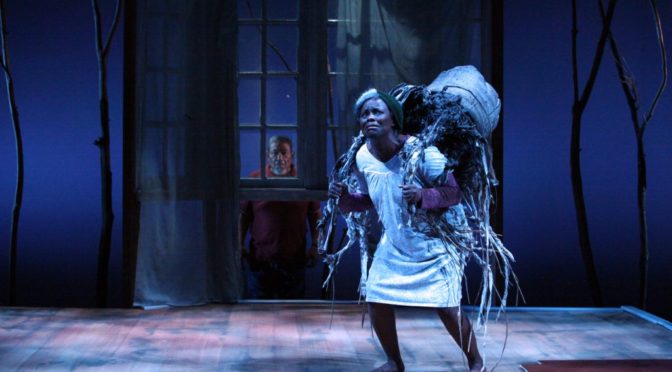
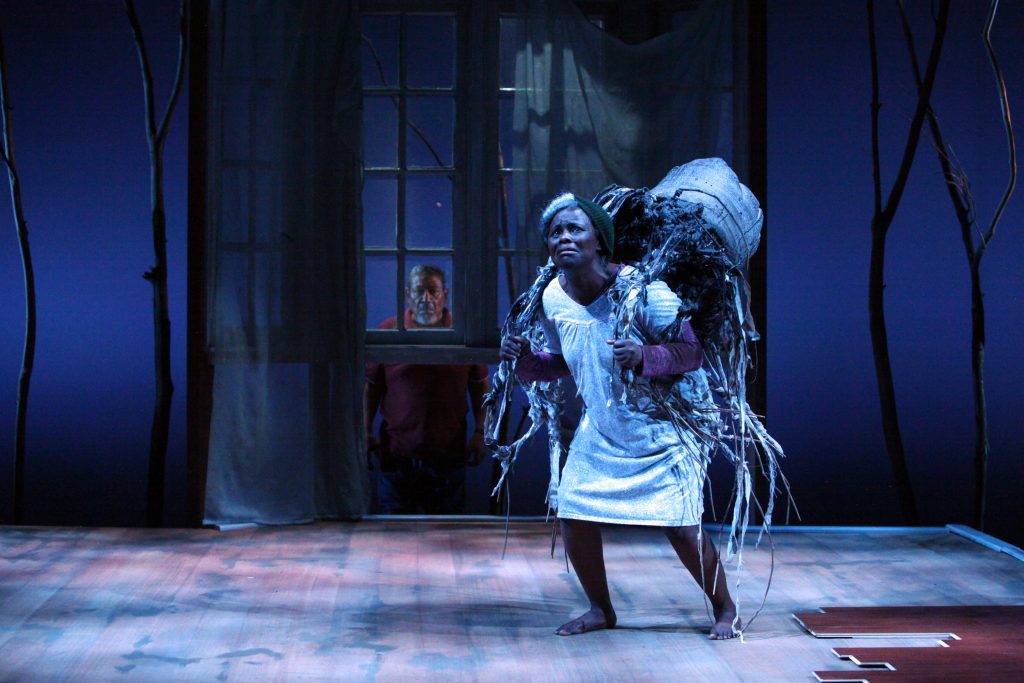
At the Magic Theater, old age is when time and objective reality start to melt. In Old Age, a cycle play from Mfoniso Udofia, in a multi-play series chronicling a Nigerian family in the United States.

When In Old Age begins, matriarch Abasiama gets an unwelcome knock at the door from a handyman hired by her children to fix up her old house, specifically the rotting wood floors. The play takes a few shot at the indignities of old age, including aching knees, difficulty moving furniture, not wanting to get up in the morning or change clothes, and dedication to television programs, but then moves on to the main event of old age as a portal between then and now and between the life of the mind and the life of the world.

As the two grouse and “get to know each other”, primarily on the basis of the workman wanting to get the job done, and the old woman resisting this unasked-for but somewhat welcome invasion, boundaries of all kinds start to slip and shift and merge. Time, space, and inanimate objects all get way too fluid as the two protagonists enter their battle, which is fundamentally a battle to connect.

For the handyman Azell Abernathy, played with charm by Steven Anthony Jones, the battle is unwelcome. What he really seems to want is to do the job and get out with joviality intact, but he cannot, and ends up confessing to a painful past, unable to answer Abasiama’s relentless inquiry whether or not he is a good man.

For Abasiama, whose past lacks a narrative but metaphorically occupies the beaten down house filled with junk and rotting floorboards, the struggle is to redirect from that vivid relationship with that past, illustrated by the groaning and muttering of the house she lives in, towards another person.

In the end, after the sort of violent transition that rips at both of them, they find themselves speaking each other’s truths, at least for a while.

For more on Mfonisia Udofia’s UFOT cycle, click here.


Trashing The Public Records Act

*Update: On March 13, Senator Hueso announced he was withdrawing Senate Bill 615.

A bill introduced in the CA State Legislature by Senator Ben Hueso cloaks in reasonable-sounding language a determined effort to trash the Public Records Act.

The passage of Senate Bill 1421 and Assembly Bill 748 in 2018, which placed police misconduct records and law enforcement body camera videos into the public records domain, have greatly expanded the body of documents available via California’s Public Records Act.

But Senate Bill 615 adds two new monumental hurdles to a process that can already be opaque and lengthy.

Continue reading Trashing The Public Records Act

San Francisco’s Stop Secret Surveillance Act

The City and County of San Francisco will begin considering a surveillance transparency ordinance in Mid-March, and would become the biggest city in the country to embrace surveillance transparency to date, if they adopt.

But San Francisco’s Stop Secret Surveillance Act will be unique. In addition to mandating board-approval of use policies and impact reports and annual reporting, San Francisco’s proposed legislation would absolutely ban the use of facial recognition software by the City. This would make San Francisco the first city in the United States to prohibit its use by city government.

Continue reading San Francisco’s Stop Secret Surveillance Act