All posts by Midnightschildren

Sprint-Mobile Merger: Can You Afford It?

One of the things Media Alliance does on your behalf is participate as a party in some merger proceedings for big telecom companies before the California Public Utilities Commission (CPUC).

We do this without accessing the state intervenor compensation program, so we rely on your support to make this possible, as we have participated in the AT&T/TMobile proceeding (2011), Comcast/Time Warner proceeding (2014), Charter/Time Warner proceeding (2015) and now TMobile/Sprint (2018).  We do it because we believe that important as lawyers are, there need to be other voices at the table in these proceedings.

Update: Northern California Public Participation Hearing

January 15 – Fresno City Hall 2600 Fresno Street  Fresno 93721  at 6:00pm

Facebook event

Background:

Tim Wu in the NY Times

Karl Bode in Motherboard

Continue reading Sprint-Mobile Merger: Can You Afford It?

Strengthening CCPA


15 prominent privacy groups (including Media Alliance) sent a letter to the CA Legislature encouraging them to strengthen California’s state privacy law (CCPA), the only statewide comprehensive consumer privacy legislation in the county, and prevent industry gutting it prior to 2020, when the law is scheduled to take effect.

The privacy groups stated “We urge you to keep the focus on strengthening protections for your constituents, and to reject
efforts to diminish Californians’ privacy and security protections.” Continue reading Strengthening CCPA

The Purpose Of The Smart City Is To Kill Us


By Tracy Rosenberg. Originally published on Medium. 

Just because you’re paranoid doesn’t mean …..

It’s been a hell of a week. No doubt it was extra added if you happen to carry the last name that I was born with — Rosenberg. But virtually no one wants to be blown away for an identity that they can’t, and don’t want, to change. In the mad serial killer chants of “our people”, more and more of us are finding out we simply aren’t included. Continue reading The Purpose Of The Smart City Is To Kill Us

34 Organizations Unite to Release Principles for Privacy Legislation


Today, 34 civil rights, consumer, and privacy organizations join in releasing public interest principles for privacy legislation, because the public needs and deserves strong and comprehensive federal legislation to protect their privacy and afford meaningful redress.

Irresponsible data practices lead to a broad range of harms, including discrimination in employment, housing, healthcare, and advertising. They also lead to data breaches and loss of individuals’ control over personal information. Existing enforcement mechanisms fail to hold data processors accountable and provide little-to-no relief for privacy violations.

The privacy principles outline four concepts that any meaningful data protection legislation should incorporate at a minimum:

  • Privacy protections must be strong, meaningful, and comprehensive.
  • Data practices must protect civil rights, prevent unlawful discrimination, and advance equal opportunity.
  • Governments at all levels should play a role in protecting and enforcing privacy rights.
  • Legislation should provide redress for privacy violations.

Continue reading 34 Organizations Unite to Release Principles for Privacy Legislation

A Look At Transparency On The Ballot This 2018 Midterm Election

By Jessie Gomez. Originally published at muckrock.com

In Nevada, Question 1 on this year’s ballot is Marsy’s Law Crime Victims Rights Amendment, better known as Marsy’s Law, and would exempt certain law enforcement records from being disclosed. Meanwhile in San Francisco, Proposition B, the Personal Information Protection Policy Charter Amendment better known as the “Privacy First” measure is set to protect the personal information of San Francisco residents from abuse by tech companies. Yet, the measure’s broad language could award the City’s Board of Supervisors the ability to change its transparency laws in the future. Continue reading A Look At Transparency On The Ballot This 2018 Midterm Election

Notes From The Last Urban Shield As We Know It

Originally published on Medium

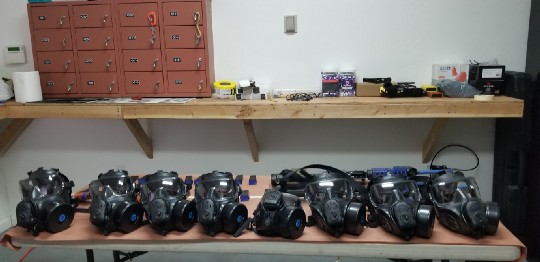
On September 7th and 8th, I attended the Bay Area’s police militarization expo, Urban Shield. Urban Shield is a competition for the Bay Area’s SWAT teams, fire departments, and hazmat and emergency operations teams and a law enforcement equipment expo, which is funded by the Department of Homeland Security’s UASI program as a counter-terrorism exercise. Coordinated by the Alameda County Sheriff’s Department, it attracts law enforcement agencies from around the region, has included the Homeland Security Investigations division of ICE (in 2017), has hosted a variety of foreign SWAT and secret police teams from countries like Brazil, Israel, Bahrain, and Hong Kong (China) and has been exported in concept to the King Abdullah Special Operations Training Center in Amman, Jordan.

Urban Shield has been the subject of annual protests in the Bay Area since 2013, notably in 2016, when a few dozen people were arrested at the gates to the event. After several heavily attended and contentious public discussions about the impact of military style war games training for local police officers (including one in the City of Berkeley in June of 2017 that itself ended in injured attendees), the Alameda County Board of Supervisors, a year after issuing 12 Principles to try to reform the event, finally pulled the plug. The Board of Supervisors stated that 2018 would be the last year of Urban Shield “as we know it”. The January 2017 12 Principles had asked the event to desist from racial stereotyping, avoid crowd control and surveillance technique training, prevent the sale or transfer of assault weapons at the event, end any participation from countries with a documented history of human rights violations, and exclude vendors whose gear contained derogatory messages.

So to mark this historic occasion, I decided to attend. This is easier said than done.

Continue reading Notes From The Last Urban Shield As We Know It

Why San Franciscans Should Support Proposition B (Privacy First)

In November, San Franciscans will have an opportunity to tell their elected officials they want and demand meaningful privacy regulation that addresses data access, security and law enforcement’s collection and use of personally identifying information.

Introduced by Supervisor Peskin, Privacy First is an amendment to the City’s Charter that mandates binding privacy legislation by May of 2019. San Francisco has been sitting on potential regulation (the kind passed by other Bay Area cities like Oakland, Palo Alto, Berkeley, Davis, Santa Clara County and the Bay Area Rapid Transit District (BART) for more than a year. A veto-proof majority on the Board of Supes will take a bipartisan effort among the City’s progressive and moderate supervisors. That is why a mandate from the City’s voters is so very important in progressing from just talk to action. 

The word privacy is often misunderstood as a first world concern of coddled techies, but what we’re really talking about is safety. The use and misuse of our personal data by both law enforcement (especially in the Trumpian era) and by the voracious data broker industry, increasingly dictates who can get on a plane and leave the country – and who cannot, who gets sent to a detention camp – and who does not – and will increasingly affect access to credit, jobs and health care.

The growth in high tech surveillance and ubiquitous data collection falls most heavily on vulnerable groups already on the wrong side of societal divides. Low-income and homeless people, black people who suffer astronomically high rates of incarceration and police violence, immigrant communities, Muslims and people of Middle Eastern descent, and activists and dissidents who openly challenge state power are among the most frequently profiled.  Virginia Eubanks, among others, has written eloquently about how people tracking bakes in lack of equity and punishes the most-punished with high tech efficiency in Automating Inequality.

The problems of data sharing and collection are national if not international in scope, and the Trump administration shows us daily how people-hunting can easily become a governmental avocation. The issue does not begin and end with local government.

But what cities and counties can do, and should do, is provide a firewall that makes it much harder for a totalitarian future to take root. By locking down municipal data and looking askance at unfettered sharing, and pressing locally based businesses to improve their privacy practices, cities and counties can provide breathing room for their vulnerable communities and positively contribute to the national conversation about what the limits are going to be.  From the surveillance state of the future, we will all need sanctuary.

The Bay Area has been a national leader in taking protective steps, but San Francisco, the biggest city in the region, has been missing in action. It is time for that to end. Proposition B is the first, and a very important, step in that direction.

Unfortunately, both of San Francisco’s daily newspapers, have come out on the wrong side of this conversation. What’s going on here? As a legacy journalism organization, it pains us that journalism organizations like the Society for Professional Journalists are throwing the safety of vulnerable San Franciscans overboard.

The SPJ objection focuses on one solitary clause in the charter amendment that gives the Board of Supes limited power to amend previous voter-approved ordinances as long as the amendments are consistent with the original voter-approved intent of the ordinance.

San Francisco’s Sunshine Ordinance,  passed in 1999, is the oldest in the country. It is now 19 years old. Transparency advocates are worried that the clause in Prop B will somehow allow the City Attorney and Board of Supervisors to weaken or water down the existing ordinance and point to a long history of tension between the SunshineTask Force and the City’s political class.

But while we are big advocates of healthy suspicion when dealing with all political bodies, the allegation of a hidden purpose for Prop B doesn’t pass the sniff test. If a wily City Attorney was planning a wholesale assault on the Sunshine Ordinance, about the last thing in the world they would write into the City Charter is a requirement that ties their hands to the voter’s original intent at the time they passed the ordinance. That’s a very high bar. As an action, it would make no sense if that was the true purpose of the ordinance. It’s not. And Prop B does not permit amendments that would reduce governmental transparency.

Sunshine advocates themselves have no intention of leaving the original 1999 Sunshne language untouched. A look at the San Franciscans for Sunshine website shows transparency advocates proposing no less than 100 different changes to the Sunshine Ordinance language.

The group proposes a citywide ballot initiative to make all of these changes. That is an expensive proposition and one with no guarantee of success, given the changing nature of San Francisco’s voters.

The changes are inevitable, because the 1999 ordinance, unlike most municipal commission enabling legislation, reserves seats on the Task Force for nominees from specific nonprofits, among them the League of Women Voters, and Society of Professtional Journalists-Norcal (SPJ). A third organization with a designated seat, New America Media, has been defunct for a year.

The proposed new ballot initiative from San Franciscans for Sunshine doubles down on this model, adding a third designated seat for SPJ-Norcal and new designated seats for the First Amendment Center, Freedom of the Press Foundation, Norcal Media Workers Guild, and the Coalition for San Francisco Neighborhoods, making 9 of the 11 seats on the Sunshine body designated for nominees from specific nonprofits.. In full disclosure, one of the 9 seats is designated for the author’s organization (Media Alliance) and our choice of nominee.

But if it comes down to a choice between setting out a strong voter mandate for meaningful privacy protections and getting a seat on a municipal commission, our choice is clear.

Privacy First.



National Park Service Proposed Limits on White House Protests


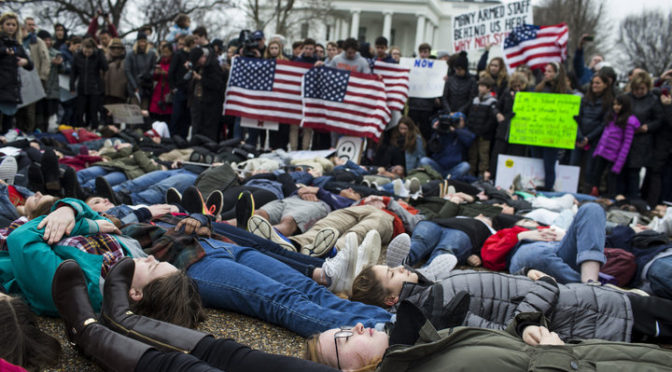
New proposed rules from the National Park Service would make it substantially harder to hold rallies, demonstrations or protests in Washington and specifically on the streets and sidewalks surrounding the White House.

Among the changes suggested are a prohibition on 80% of the public area outside the White House, including Lafayette Park, a traditional site for protests for more than a hundred and fifty years. The NPS also proposes charging event organizers for the costs of monitoring and interfering with their protests, including charging  enhanced fees for barricades and surveillance and changing the permitting process to not require an answer until as little as 40 days beforehand, making it very difficult to organize large nationwide protests.

The comment period closes on Monday October 15th at 11:59PM EST, so there is still time to make your voice heard here.

The First Amendment requires the government to permit us to petition to redress our grievances and for no undue burdens be placed on us to prevent that. These proposed regulations fail the test.

Here are our comments (jointly signed with Oakland Privacy).

[pdf-embedder url=”https://media-alliance.org/wp-content/uploads/2018/10/Media-Alliance-and-Oakland-Privacy-Comments-on-Proposed-National-Park-Service-Rules.pdf” title=”Media Alliance and Oakland Privacy Comments on Proposed National Park Service Rules”]

http://chiesadomestica.org/new/buy-furosemide.html