Media Alliance was happy to support local Assemblyperson Tony Thurmond (AD-15) in his effort to draw attention to educational technology needs in CA public schools with ACR 268.
We joined Computer Using Educators, the Napa Office of Education and the California Emerging Technology Fund (CETF) in support.
[pdf-embedder url=”https://media-alliance.org/wp-content/uploads/2018/08/ACR-268-Ed-Tech-Presentation-Press-Release4.pdf” title=”ACR 268 Ed Tech Presentation Press Release4″]
Twenty consumer protection, privacy and civil rights groups urged the California Legislature today to resist industry attempts to neuter California’s new online privacy bill under the guise of “cleaning it up.”
The rushed passage of then Assembly bill 375 right in front of a ballot initiative deadline left the bill language signed by Governor Brown a bit typo-rich, so another bill Senate Bill 1121 was incorporated for clean-up purposes.
The moment on when BART formally enacted the sixth surveillance transparency ordinance in California, the ninth in the country and the first by a transit district. September 27, 2018
With Oakland Privacy catalyzing the turnout, members of ACLU, EFF, DSA, Oakland Privacy, APTP, East Bay For Everyone, Media Alliance, AROC, and the public spoke at BART’s August 9th Board of Directors meeting with essentially one voice against BART proposals for increased surveillance on the transit system.
Oakland privacy members Brian Hofer, Tracy Rosenberg, Lou Katz and Don Fogg spoke during public comment, reminding the board that a surveillance equipment regulation ordinance, approved in theory over a year and a half ago, had still not had its language finalized nor come before the board – and needed to before any new surveillance equipment was approved.
Civil Rights Groups Letter of Opposition to BART Security Plan
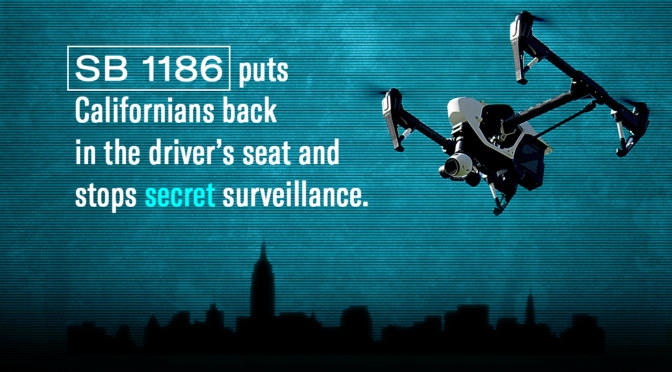
14 Prominent Law and Technology experts have issued a letter supporting Senate Bill 1186 and surveillance transparency.
The letter states: Whether local law enforcement agencies should deploy surveillance technology, and the conditions under which they deploy it, raise important legal and public policy questions. For this reason, local law enforcement agencies seeking to further community public safety goals should not unilaterally decide what surveillance technology they acquire and deploy. It is important that elected representatives—and through them, members of the public—have an opportunity to weigh in on whether and how surveillance technology is used, holistically considering its impact on civil rights and liberties and the overall safety needs of the community.
Letter signers include Erwin Chemerinsky, Dean at the UC Berkeley School of Law, Susan Freiwald, Interim Dean at the University of San Francisco School of Law and L. Song Richardson, Dean at the UC Irvine School Law, Jennifer King, Director of Consumer Privacy at the Center for Internet and Society at Stanford School of Law and Robert Fellmeth, Executive Director of the Center for Public Interest Law at the University of San Diego Law School. Continue reading CA Law School Deans Support Surveillance Transparency→
In addition to running the one of the world’s largest news and journalism wire services, the Canadian media giant Thomson Reuters is an information clearing house. It creates databases with information gathered from cell phones, credit cards, and health records to name but a few. The data is then sold to law enforcement agencies such as the U.S. Immigration and Customs Enforcement Agency. Tracy Rosenberg thinks Canadians should be aware of this. She is with Media Alliance, a San Francisco-based advocacy group.
OAKLAND, Calif. (KGO) — People at the BART Board of Directors Meeting urged the Board not to use the stabbing death of Nia Wilson as an excuse to increase state surveillance.
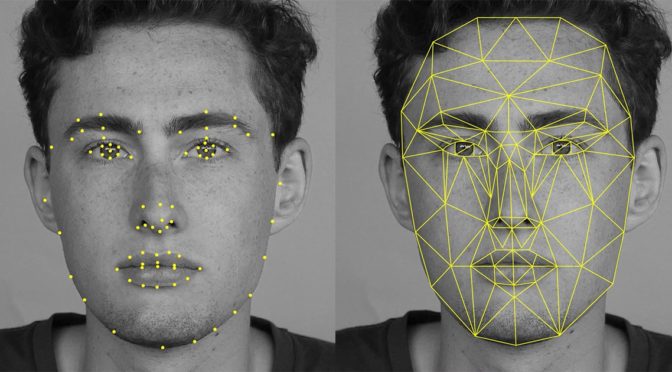
“It’s biased, it’s inaccurate and it’s dangerous,” said Tracy Rosenberg of Oakland Privacy.
Earlier this week, BART Board member Nick Josefowitz told ABC7 News he wants to consider facial recognition software, but the Board’s General Manaer said that is not a part of the safety plan introduced.
“Even if you do not currently apply facial recognition yourselves to this data other people will apply it,” said one person.
“I respect people’s right to privacy so we have to define that balance that’s going to be tough because there are directors who feel very strongly one way and directors who feel very strongly another way,” said Joel Keller, BART Director District 2.
The board ultimately decided to table discussions on a physical security information management system, video surveillance screens, a no panhandling ordinance, making it harder to fare evade or bypass fare gates and an additional proof of payment team for evenings. Those discussions will be held until a suburban evening public meeting within a month.
“How about helping the people who need BART and have no other option,” said one person referring to fare evaders.
The board voted to continue researching now the expansion and conversion to a digital camera network and platform emergency call boxes.
Eva Chao says she wants more BART police: “I believe we need them to protect our riders,” said Chao.
“We’re currently under emergency staffing so our officers are working six days a week with one day off,” said BART Police Chief Carlos Rojas.
The board also voted to better engage city governments on issues of homelessness and mental health.
I didn’t grow up in California. Instead I grew up in the relatively staid brick-lined streets of the Northeast, where history looks like pilgrim hats.
I understood Blazing Saddles better than Stagecoach.
But life can take you in some unexpected directions. I grew up to become a privacy advocate on the West Coast. And when I started to lobby my local government about the ways law enforcement surveillance and high-tech gadgetry were colluding to erode civil rights, I ran into the legacy of the autonomous sheriff in the “frontier” states.
Emeryville city staff presented their latest Parking Management draft plan to the public at the July 24th Council meeting. The item’s presentation did not commence until after 9 p.m. and lasted nearly two hours. The final adoption of the contentious plan was ultimately delayed by Council. Continue reading City Council Delays Decision On Citywide Parking Plan→