

Net Freedom’s poll says that 58% of undecided voters in Republican-held swing districts say they are more likely to vote for an incumbent who takes immediate action to force a vote to overturn the FCC — while only 8% are less likely to support such an incumbent. Conversely, not supporting the CRA is a potential liability: If a Republican incumbent refuses to take immediate action to force a vote to overturn the FCC, 45% of undecided voters are less likely to vote for them.” Continue reading New Poll Shows Republican Swing District Voters Want Support For Net Neutrality CRA
Two dozen civil rights and liberties groups rose above party-based partisanship to insist Congressional Democrats including Chuck Schumer, Nancy Pelosi, John Warner and Adam Schiff stop trying to weaken congressional oversight of intelligence agencies. Continue reading 24 Civil Rights Groups Write To Dems Demanding Intelligence Oversight
By Lisa Rein. Originally published in Mondo 2000
These simple letter templates can compel the Police and Sheriff Departments of a given city to provide you with documentation regarding every type of surveillance equipment in existence for a given City (Police) and saCounty (Sheriff).
It’s a roundabout way of determining what surveillance equipment is being used on the public in a given city, but since it’s all we have, at least the #ASDPSP project will make it so much easier for journalists and the public to get their hands on this information.
In this third installment of our series, Tracy will help us understand more about what we found in Sacramento, and how do approach local politicians to put pressure on them to do something about it, by implementing a “surveillance policy framework.”
| Here’s are the first two interviews of this series:
Interview with Oakland Privacy’s Tracy Rosenberg On The Aaron Swartz Day Police Surveillance Project |
Tracy Rosenberg, co-founder of the Aaron Swartz Day Police Surveillance Project, explains #whatwefound in #Sacramento using our project’s letter templates and Muckrock, an online platform for filing public records requests. Continue reading Mondo 2000: The Aaron Swartz Day Police Surveillance Project #ASDPSP – Reports Back: Here’s #WhatWeFound In Sacramento
Everything old is new again. One of the advantages of being a venerable organization is that your ancestors have already taken a go at issues and problems recurring today.
Propaganda Review was a Media Alliance magazine that explored techniques of manipulation, our vulnerability to them, and a society obsessed with the engineering of consent.
Sounds familiar, doesn’t it?
So, with the generous help of William Bowles, we are embarking on the project of excavating as much of Propaganda Review as we can in order to make it available for a bit of context in today’s “fake news” debate.
In this edition, you’ll hear from:
Continue reading Propaganda Review Issue 1, Volume 5 1987-1990
By Dell Cameron and Bryan Menegus – originally published in Gizmodo
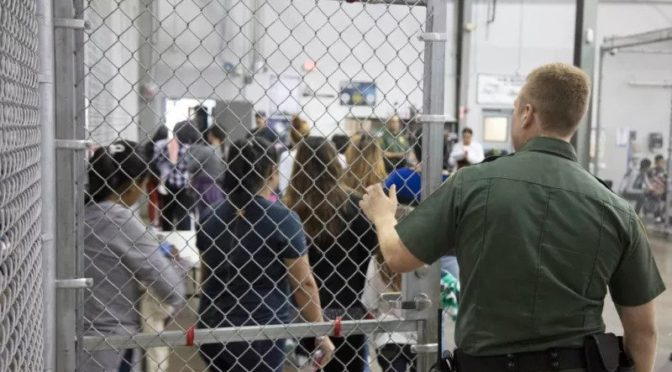
Embroiled cloud computing company Salesforce tried to sanitize its image through a hefty donation to the Refugee and Immigrant Center for Education and Legal Services—one of the highest-profile organizations resisting our draconian immigration policy. RAICES said no thanks—and at least six other high-profile organizations are now threatening to cut ties with the company.
Salesforce’s work with U.S. Customs and Border Protection—an agency that, along with U.S. Immigration and Customs Enforcement, is chiefly associated with family separations—was first announced by the company in March, but meaningfully came to light last month when the company’s own employees pressured CEO Mark Benioff to cancel the contract. “Given the inhumane separation of children from their parents currently taking place at the border,” they wrote, “Salesforce should re-examine our contractual relationship with CBP and speak out against its practices.”
By Alexis Collins. Originally posted on Dissent Wire
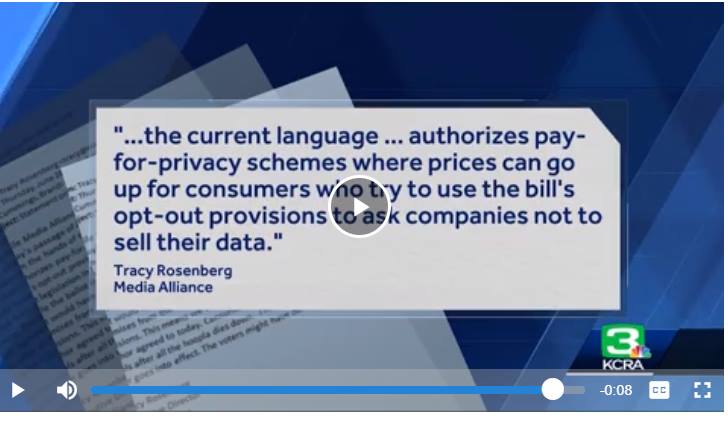
The 2018 California Consumer Privacy Act is a law that will require technology corporations, such as Google and Facebook, to drastically alter their business models regarding data collection and privacy regulations. The legislation was unanimously approved by the state legislature on June 28 and signed by Gov. Jerry Brown (D) the same day. The bill’s quick turn around resulted from pressures that legislators faced from an upcoming November ballot initiative, which would have created more stringent privacy rules. It will go into effect on January 1, 2020. Continue reading California Enacts Law Protecting Consumer Privacy, But There is Still a Ways to Go